






 |
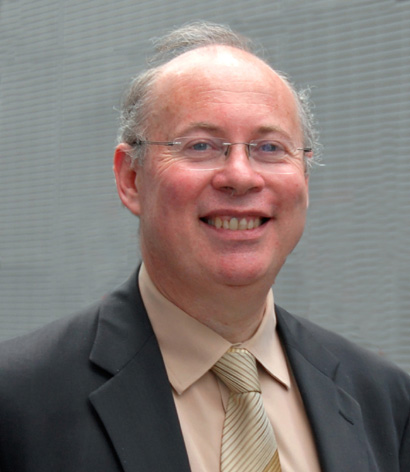
Denis Le Bihan has achieved international recognition for his outstanding contributions to the development of new imaging methods allowing, in particular to study human brain function. His work has combined extremely innovative methods, developed for Magnetic Resonance Imaging (MRI) with the application of these methods to questions of the utmost scientific and clinical importance. Dr. Le Bihan is a native of France, where he completed his training in Medicine (including a Residency in Neurosurgery and Radiology) and Physics (Nuclear and Elementary Particles Physics) before moving to the United States in 1987. He served as a Research Section Chief in the Clinical Center at NIH, Bethesda, Maryland and as a Clinical Associate Professor of Radiology at Georgetown University, Washington, DC. In 1994, Dr. Le Bihan was appointed at the Service Hospitalier Frédéric Joliot of the CEA, in Orsay, France, an internationally recognized MRI and PET facility. In 1999, Dr. Le Bihan established the Anatomical and Functional Neuroimaging Laboratory at SHFJ to develop and apply groundbreaking neuroimaging methods. In 2000, Dr. Le Bihan became the director of the Federative Research Institute of Functional Neuroimaging (IFR 49, Orsay/Paris). Since 2005, Dr. Le Bihan has also been a Visiting Professor at Kyoto University Graduate School of Medicine (Human Brain Research Center). In 2007 Dr. Le Bihan became the Founding Director of NeuroSpin, a new Institute of the CEA aimed at developing and using ultra high field Magnetic Resonance to understand the brain, from mouse to man. |
Dr. Le Bihan is especially credited with inventing, developing and introducing into research and clinical practice the concept of diffusion MRI, a new and powerful approach to study normal and diseased brain anatomy and function, as well as brain wiring, from the measurement of molecular motion (Brownian motion), in particular for water, in biological tissues. This method has been taken up by MRI system manufacturers and is today used worldwide both for basic research and clinical applications, especially for the management of acute brain ischemia (stroke), white matter diseases and connectivity disorders, as well as for the diagnosis of cancer (brain, breast, prostate, liver). Noticeably, with Dr.Basser at NIH, Dr Le Bihan introduced Diffusion Tensor Imaging (DTI) which allows to map the circuitry of the brain. This approach is yielding insight into how brain connections underlie brain function, and will open up new lines of inquiry for human neuroscience and for treating brain disorders, especially psychiatric disorders. Dr. Le Bihan has also significantly contributed to the development of functional MRI (fMRI) which has changed for ever the way we study the humain brain, giving access to the neural networks underlying complex cognitive functions, such as language, mental imagery or even consciousness.
Dr. Le Bihan' pioneering research in diffusion and functional MRI has had an enormous impact on the fields of modern Radiology and Neuroscience. Indeed, his contributions are widely acknowledged in the literature and in medical curricula throughout the world. The most recent discovery of D. Le Bihan's team is that water diffusion slows down during neuronal activation. These results are of considerable interest, because they suggest that dynamic changes in brain tissue structure (such as neuron swelling) are concomitant to brain activation. Diffusion MRI could thus provide a new, direct approach to detect and localize brain activation, significantly shifting from the current PET and fMRI approaches based on blood flow changes.
Dr. Le Bihan belongs to
several professional societies and serves on the editorial boards of prestigious
peer reviewed journals. Commensurate with his prolific research, Dr. Le Bihan
has authored or co-authored over 250 articles, book chapters and review articles in the fields of MRI, imaging,
neuroscience and radiology. For his contributions, Dr. Le Bihan was
awarded in 2001 the Gold Medal of the International Society for
Magnetic Resonance in Medicine. He is the 2002 recipient of the famous Lounsbery
Award from the National Academy of Sciences (USA) and French
Academy of Sciences, the corecipient (with S. Dehaene) of the Louis D.
Award of the Institut de
France in 2003. Dr. Le Bihan also received the prestigious Honda Prize (2012) and Louis Jeantet Foundation Award (2014). Dr Le Bihan, an Officer in the National Order of Merit, is a full
member of the French Academy of
Sciences
Last revised: 1/1/15
.
This page is context sensitive: More details can be
found by pointing selected words with cursor.